Summary
- Your windshield provides up to 60% of your car’s structural strength—any damage is a safety risk
- Even small chips like a bull’s eye or a half-moon can quickly spread into larger cracks
- Star and combination cracks are highly unstable and can expand due to vibrations and temperature changes
- Cracks over 6 inches always require replacement, not repair
- Edge and stress cracks are the most dangerous and are typically unrepairable
- Damage in the driver’s line of sight significantly reduces visibility and reaction time
- Windshield damage can interfere with airbag deployment, increasing injury risk
- Pitting causes glare and poor night visibility, making driving unsafe over time
- Early repair is cheaper, but delaying can lead to full windshield replacement
- If in doubt, replace the windshield to maintain safety and compliance
Your car’s windshield is far more than a transparent barrier. It maintains your car’s structural integrity, and any vehicle with compromised structural integrity is never completely safe to drive.
The windshield provides up to 30% to 60% of the cabin’s structural strength. Without it, the roof is significantly more likely to collapse in a rollover accident.
While you should not drive a car with even minor damage to the windshield, in certain conditions, it can become more dangerous. Let’s understand the 9 common windshield damage types.
9 Types of Windshield Damage
1. Bull’s Eye
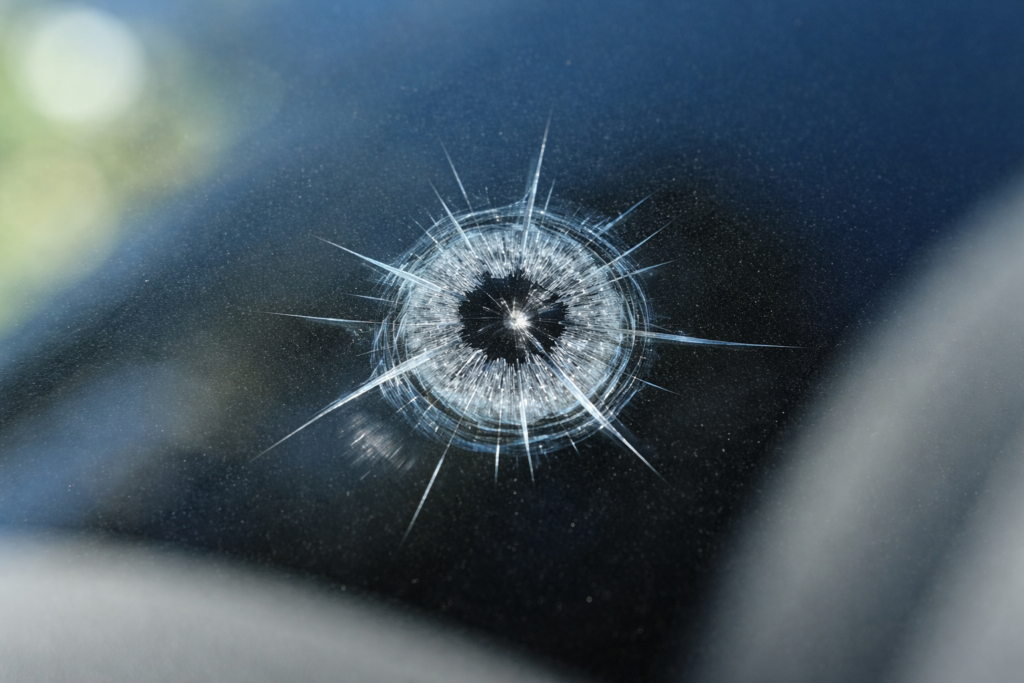
It is characterized by a circular, dark-colored crater with a distinct impact point in the center, often surrounded by concentric rings that give it a “target” appearance.
Cause
The bull’s eye is caused when a small stone or piece of road aggregate strikes the glass at a high velocity.
Risks and Dangers
- The damage can create a pocket between the layers of laminated glass, trapping moisture, dirt, and clouding the glass.
- When the light from the headlights of oncoming vehicles hits the bull’s eye, it creates a glare that can momentarily blind you.
Repair
A technician cleans the impact point and uses a vacuum tool to remove all air and moisture. A high-viscosity, UV-curable acrylic resin is forced into the break under pressure and hardened using a UV light source. In the end, the surface is polished flat.
2. Half-Moon
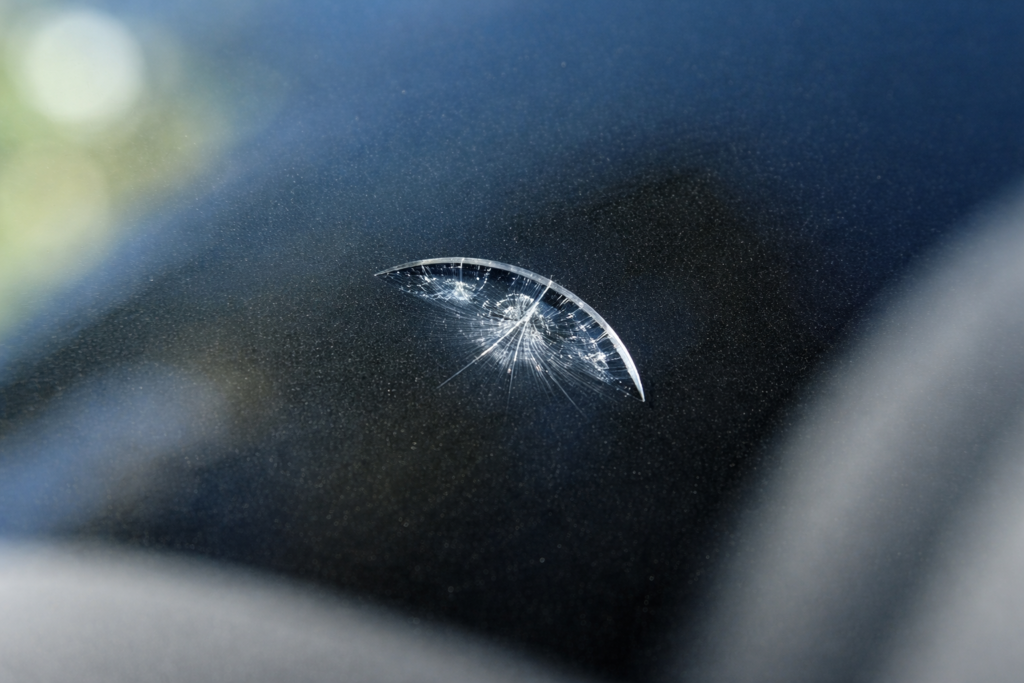
A half-moon car windshield crack is a semi-circular fracture that appears as a dark, crescent-shaped shadow within the glass. You can also call it a partial bull’s eye, as one side of the impact point is seemingly intact. On the other hand, the opposite side is deeply cratered.
Cause
This car windshield damage is caused when a blunt object strikes the glass at an acute angle rather than a direct, 90-degree hit.
Risks and Dangers
- The tension in the glass is not distributed evenly because of the “asymmetrical” damage. The flat side of the damage is a high-stress point where a crack is likely to originate and run across the windshield.
- The irregular edges of a half-moon are actually harder to keep clean. Dirt and wiper fluid can lodge into the crescent, leaving a visible scar even after professional repair.
- It is a weak point that can serve as the starting point for shattering the entire pane during a collision.
Repair
A technician uses a specialized tool to clear microscopic glass shards. Next, air is evacuated, and an ultra-thin resin is pushed into the narrow, tapered edges of the half-moon. After filling the internal damage, the technician applies a thicker “pit resin” to the surface impact point. It is then cured with a UV lamp to restore a smooth finish for your wiper blades.
3. Star Crack
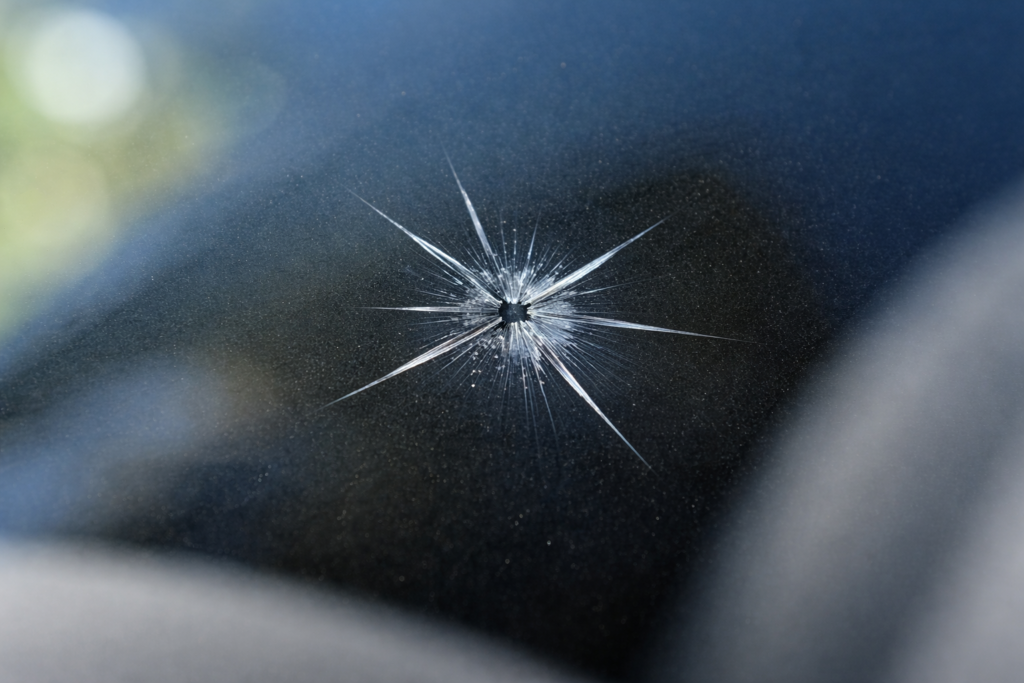
A star crack is characterized by a central impact point with several small cracks radiating outward in a star-like pattern.
Cause
This damage occurs when a sharp, jagged object hits the glass with significant force.
Risks and Dangers
- Every time the car’s frame flexes when you hit a pothole, pressure on the cracks forces them to grow.
- Engine vibrations and wind resistance at highway speeds are often enough to cause a star crack to “spider-web” across the entire windshield without warning.
- Applying heat to a cold windshield with a star crack creates a massive expansion differential at the tips of the cracks, which often results in an immediate 12-inch crack.
Repair
Repairing a windshield star crack is more technical than a standard chip because every crack must be filled. A technician applies slight pressure to the glass to gently open the fractures. A very thin, low-viscosity resin is used to ensure it seeps into the microscopic points of the star pattern. Each crack line is cured using a UV curing lamp.
It is recommended to replace the windshield if any crack is longer than 3 inches or if the total diameter of the star exceeds the size of a quarter.
4. Combination Crack
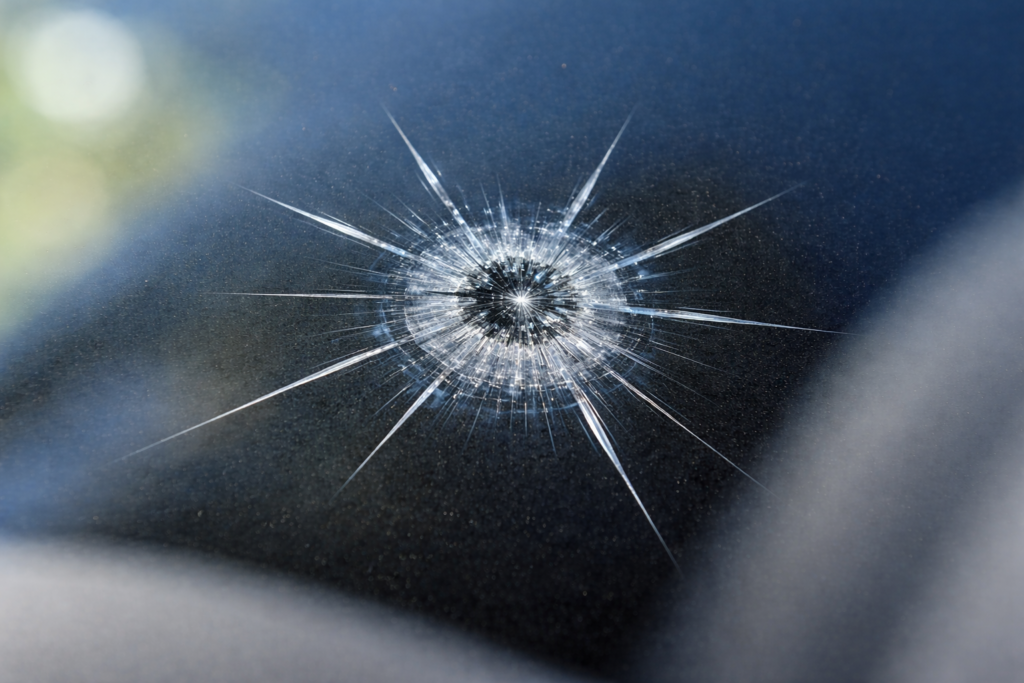
It is a complex fracture that typically features a bull’s-eye with star cracks radiating from it, often with crushed glass at the very center of the impact.
Cause
A combination crack is often caused by a heavy, high-velocity impact from a large or jagged object, such as a large piece of road gravel or a heavy hailstone.
Risks and Dangers
- The central crater weakens the glass, and the radiating cracks provide paths for that weakness to travel.
- The crushed glass in the center catches light from every angle, creating a blinding “white-out” spot that can hide oncoming vehicles.
- The glass at the center is crushed into powder. As a result, the resin has less “original” material to bond to. The repair is less structurally sound than a simple chip.
Repair
If the total diameter of the damage exceeds that of a quarter, you need to replace your windshield. If it is small enough to repair, then the technician uses a bridge tool to apply varying levels of pressure. The technician first fills the deep crater, then flexes the glass to force resin into the radiating legs.
They may also use a high-viscosity “pit filler” to literally rebuild the missing surface of the glass where the impact crushed it.
5. Long Crack (Over 6 Inches)
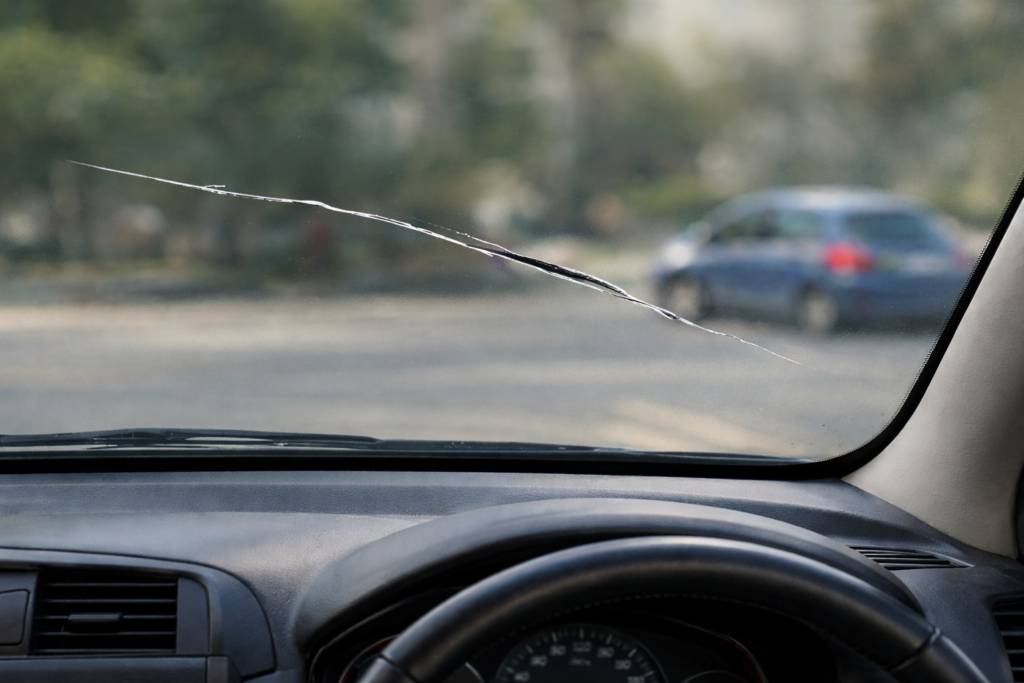
It is a single, continuous fracture measuring more than 6 inches in length. If a crack is longer than a standard U.S. dollar bill, it is categorized as a Long Crack.
Causes
A long crack often results from a smaller, ignored chip. The windshield is scorching on a 100°F day. When you start the car and blast the A/C, the rapid cooling causes the glass to contract, forcing a small chip to split open into a long crack. Driving over potholes or uneven terrain can cause the vehicle’s frame to flex or twist, pushing a small fracture across the entire glass surface.
Risks and Dangers
- A crack over 6 inches long creates a “fault line” that significantly weakens the glass’s ability to support the roof. The passenger-side airbag bounces off the windshield to protect the passenger. A long crack can cause the windshield to shatter or detach under this force, leaving the airbag with nothing to lean against.
- At certain angles, a long crack can create a “blind strip” across your field of vision, hiding pedestrians or smaller vehicles.
Repair
You must replace your windshield if it has a crack longer than 6 inches. Under California Vehicle Code (CVC) 26710, it is illegal to drive a vehicle if damage is in the driver’s critical vision area (the area swept by the wipers). The law requires you to address the issue within 48 hours.
6. Edge Crack
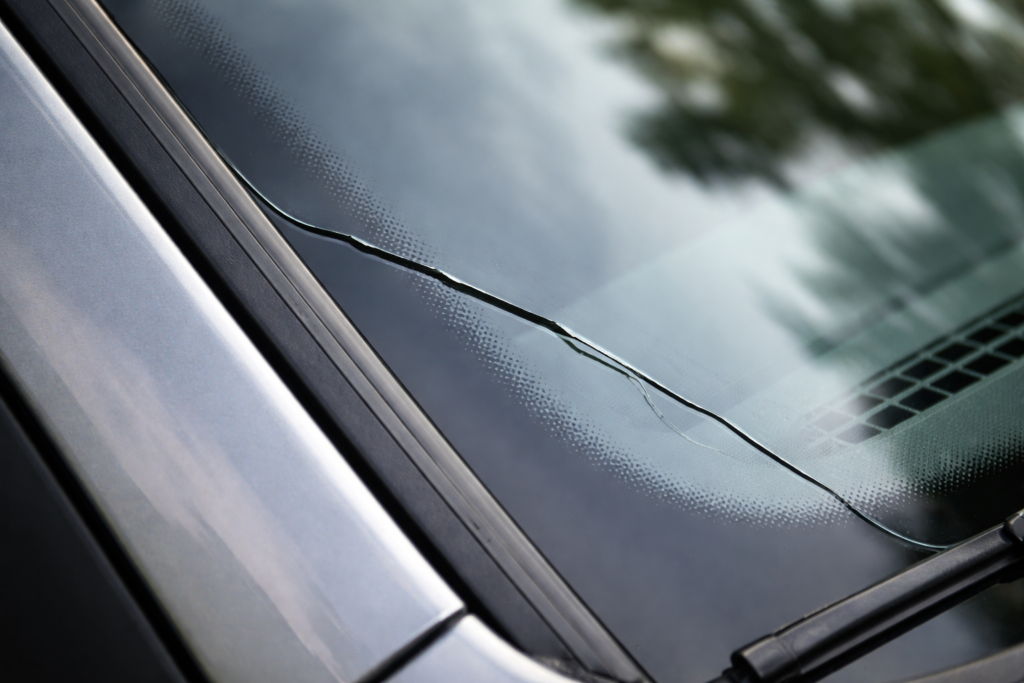
An edge crack is any fracture that begins within two inches of the windshield’s outer perimeter.
Cause
An edge crack is typically the result of structural or thermal stress resulting from sudden temperature changes (defroster/AC), structural body flex, poor installation, or hidden chips near the molding.
Risks and Dangers
- The windshield is bonded to the vehicle’s steel frame along its edges. In a rollover accident, an edge crack significantly increases the likelihood of roof collapse because the glass can no longer provide support.
- The force of the airbag deployment (which happens at over 100 mph) can cause the entire windshield to be ejected from the frame. The passenger may be left with reduced protection.
- Edge cracks spread across the entire span of the glass much faster than center chips.
Repair
According to the National Windshield Repair Association (NWRA) and ROLAGS standards, any crack that touches the edge of the glass is generally considered unrepairable.
Under CVC 26710, a California Highway Patrol officer can issue an immediate 48-hour fix-it order for an edge crack.
7. Floater Crack
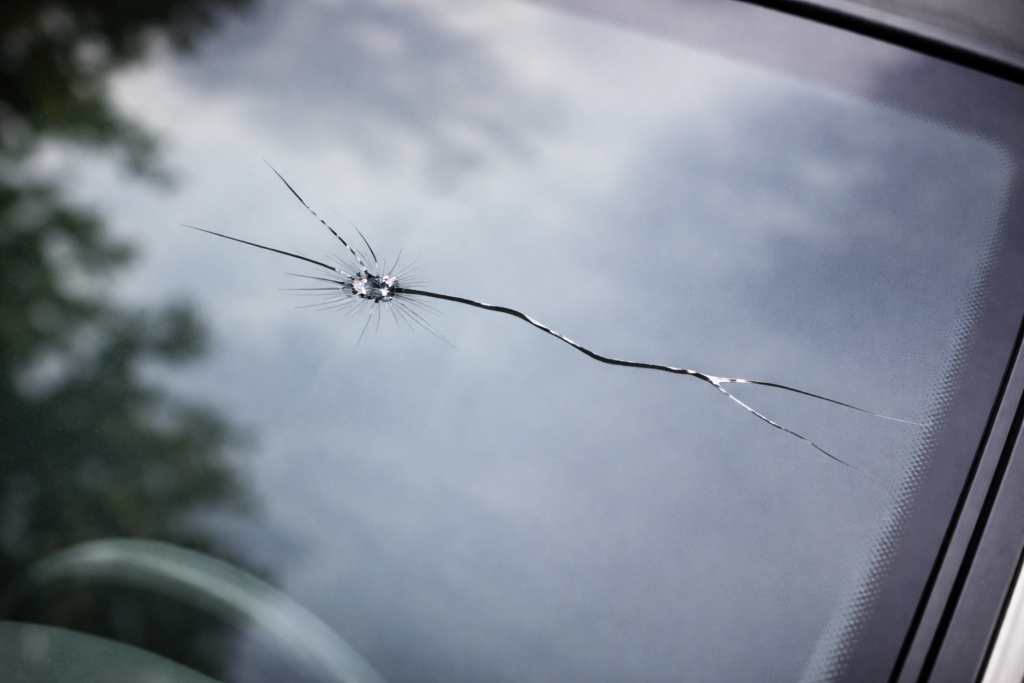
It is a crack that begins at least two inches away from the outer edge. Such cracks typically appear in the driver’s field of vision.
Causes
A floater crack is often a result of a neglected stone chip. It often begins with a bull’s-eye or star crack.
Risks and Dangers
- A floater crack in your line of sight can block your view.
- It creates a ghosting effect where you see double headlights or distorted brake lights at night.
- It can quickly grow in multiple directions.
Repair
If it is not in your direct line of sight and is under 6 inches, a floater crack is repairable. However, it is somewhat difficult to repair as the crack is often in the middle of a curved windshield. The technician uses a bridge tool to slightly flex the glass from the inside, forcing the crack to “inhale” the thin resin.
8. Stress Crack
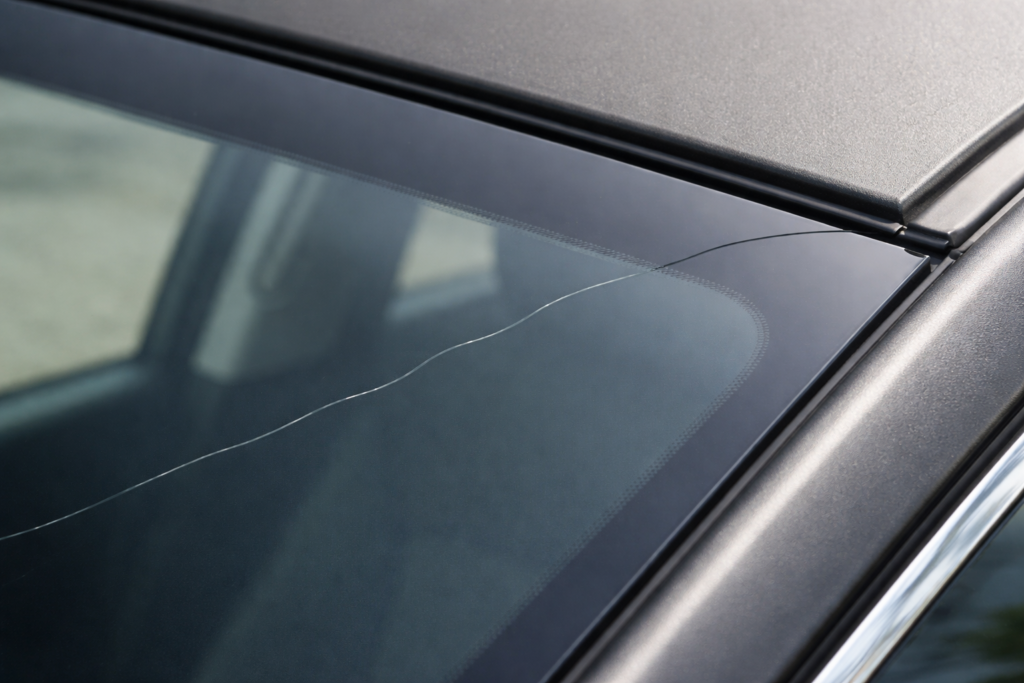
A stress crack typically starts at the very edge of the windshield and appears as a long, clean, slightly wavy line. However, you often don’t feel a chip or crater when you run your fingernail across the line because the crack starts from internal tension.
Causes
Stress cracks are caused by extreme temperature fluctuations or structural pressure from the frame.
Risks and Dangers
- The crack can grow several inches in a matter of seconds.
- A stress crack at the perimeter weakens the windshield’s ability to stay in place during a passenger-side airbag deployment.
Repair
There is no impact point to inject resin into a stress crack. It always requires a replacement.
9. Windshield Pitting
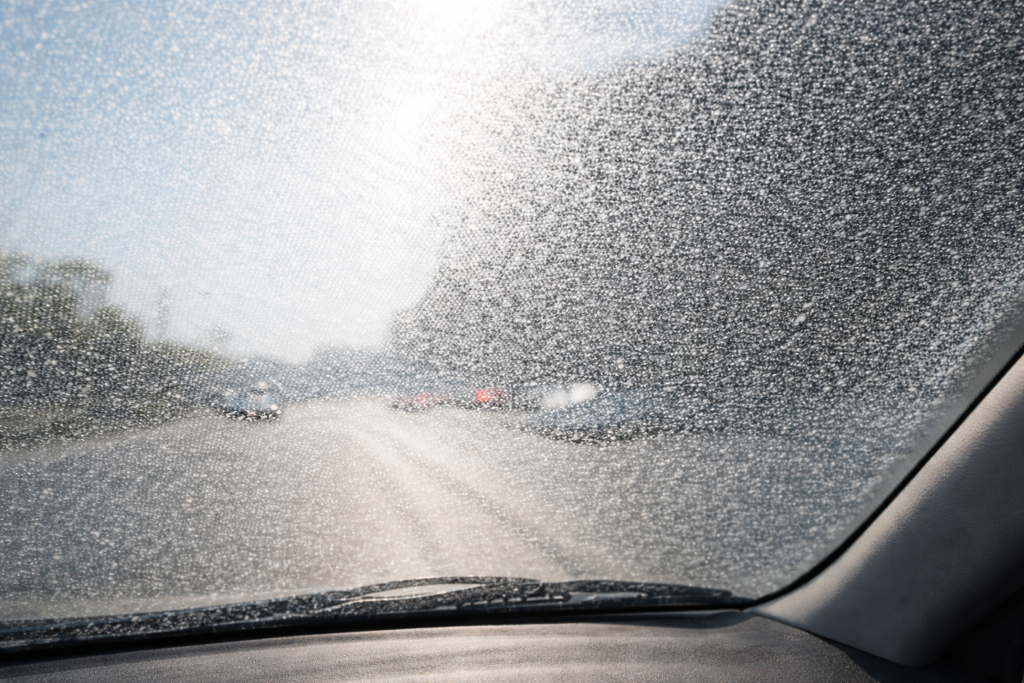
Windshield pitting consists of thousands of microscopic craters covering the surface of the glass. It is a gradual erosion of the glass surface.
Causes
Pitting is caused by a constant bombardment of high-speed abrasive particles, such as sand, silt, and tiny road-salt crystals, acting like sandpaper at highway speeds.
Risks and Dangers
- When low-angle sun hits the thousands of tiny pits, each pit refracts the light, creating a massive, opaque “white-out” glare that can completely hide pedestrians or brake lights.
- Similarly, headlights from oncoming traffic scatter on the pitted surface, creating a hazy halo effect at night. This causes significant eye fatigue and reduces your ability to judge distances.
- A pitted windshield becomes abrasive, prematurely wearing down the rubber edge of your wiper blades.
Repair
You can polish out some very light surface scratches with cerium oxide. However, you need to remove too much glass to buff out thousands of pits. Removing too much glass creates “waves” or “lenses” that distort your vision worse than the pits did. If the density of the pitting creates a haze, then the windshield is considered defective and must be replaced.
Conclusion
Here in California, your windshield must meet the visibility standards set by CVC 26710 and the structural requirements of the ANSI/NWRA/ROLAGS 001-2014 safety code. The windshield must provide a clear view. Any damage can result in a 48-hour fix-it ticket or, worse, a structural failure during an accident.
Frequently Asked Questions
How long does it take to replace a windshield?
It typically takes 45 to 60 minutes to replace a car windshield.
Is a windshield crack serious?
Take a windshield crack seriously, as it compromises the structural integrity of the glass. It becomes up to 60% less effective at supporting the roof during a rollover. Cracks also refract light, creating glare.
Can I replace my car windshield myself?
You should never attempt a full windshield replacement yourself.
Does insurance cover windshield repair or replacement?
Yes—most comprehensive insurance covers it. Repairs are often free, but replacements may require a deductible unless you have full glass coverage.