

“My windshield cracked overnight — how is that possible?” This is the question almost every car owner thinks about.
Suppose you park your vehicle in perfect condition, but then by morning, a visible crack runs across the glass. No collision. No loud impact. It feels random — but it isn’t. If your windshield cracked overnight, there was always an underlying cause.
Modern windshields are structurally bonded to the vehicle frame. They support roof strength, assist airbag deployment, and house advanced safety sensors. Because they are constantly under tension, even small chips combined with temperature swings can trigger sudden windshield crack spreading, sometimes while the car is sitting still.
In this guide, you’ll learn what could be the reason of windshield cracks, and how to prevent them.
5 Common Reasons for Windshield Crack Formation
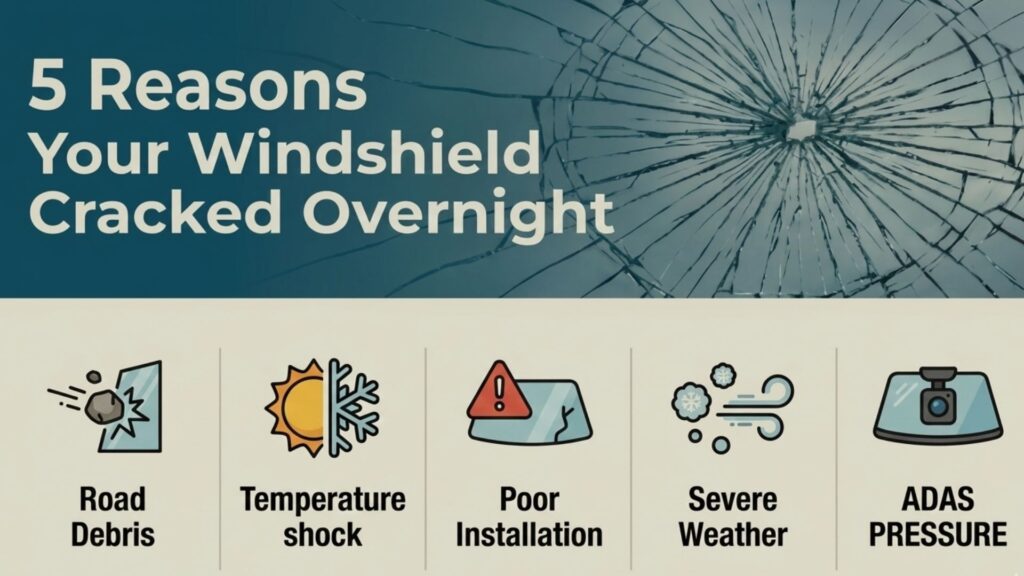
Here are the most common reasons for windshield crack issues.
1. Road Debris and Flying Gravel (Most Common Cause)
The most common cause of a cracked windshield is flying road debris, especially small rocks thrown by trucks or other high-speed vehicles.
When these stones hit the glass, they often create a small chip. Although the damage may look minor at first, vibration, temperature changes, and driving pressure can cause that chip to expand into a larger crack over time.
2. Extreme Temperature Changes and Stress Cracks
Sudden temperature changes are a major reason windshields crack without visible impact. Rapid expansion and contraction of glass create internal pressure, leading to a stress crack.
This explains why many drivers report a cracked windshield overnight or say, “My windshield cracked for no reason.” In most cases, temperature shock is the real cause.
Windshield Stress Crack vs Impact Crack
| Type of Crack | Main Cause | Appearance |
| Stress Crack | Temperature changes, internal pressure | Starts at the edge, no visible impact point |
| Impact Crack | Rock or debris hit | Visible chip or star-shaped mark |
Common triggers include blasting the defroster on icy glass or sudden A/C cooling on a hot windshield.
3. Poor Installation or Manufacturing Defects
Improper installation can create uneven pressure points along the glass. Internal tension may slowly develop into cracks, sometimes weeks after replacement.
If this occurs shortly after installation, it may fall under a stress crack windshield warranty, depending on the provider’s coverage terms.
4. Severe Weather and Environmental Damage
Extreme weather conditions frequently contribute to cracking.
Common environmental causes include:
- Hail impact
- Falling branches
- Wind-blown debris
- Extreme heat and cold cycles
These external forces weaken the outer layer of laminated glass, increasing the risk of spreading cracks.
5. Modern ADAS Sensors and Bonded Windshield Pressure
Modern windshields are more tightly bonded than older models and often house Advanced Driver Assistance Systems (ADAS).
These systems rely on windshield stability for accurate calibration.
| Factor | Why It Increases Crack Risk |
| Stronger bonding adhesives | Higher internal pressure |
| Integrated cameras/sensors | More structural rigidity |
| Larger windshield designs | Greater stress distribution |
Because of this added pressure, windshields today are more sensitive to stress and impact. Proper repair and recalibration are essential to maintain both structural integrity and vehicle safety systems.
How to Prevent Windshield Cracks
While not every crack can be avoided, simple driving and maintenance habits can significantly prevent windshield cracks and reduce long-term damage. So, prevention is always cheaper and safer than replacement.
Maintain a Safe Following Distance
Keeping space between your vehicle and trucks reduces the risk of flying gravel impacts—the most common cause of chips.
Use the 3-second rule:
- Pick a fixed object on the road.
- Ensure at least three seconds pass before you reach it after the vehicle ahead.
More distance means less impact force from road debris.
Manage Temperature Changes Gradually
Sudden temperature shifts create stress inside the glass. To stop the windshield from cracking, avoid extreme changes.
| What to Avoid | Why It Matters |
| Blasting the hot defroster on the cold glass | Rapid expansion causes stress cracks |
| Pouring hot water on ice | Instant thermal shock can crack glass |
| Maximum A/C on overheated glass | Sudden contraction weakens the structure |
Gradual heating or cooling reduces the buildup of internal pressure.
Park Smartly
Where you park directly affects the durability of the glass.
- Choose shaded areas whenever possible
- Use a windshield sunshade in hot weather
- Avoid moving from extreme heat to extreme cold quickly
Reducing thermal stress helps stop small weaknesses from expanding.
Replace Wiper Blades Regularly
Worn-out wiper blades can scratch the surface of the windshield. Over time, these micro-scratches create weak points where cracks may begin.
Replacing blades regularly protects the outer glass layer and maintains visibility.
Repair Chips Immediately
The most effective way to prevent a windshield crack from spreading is to repair it early.
Small chips may seem harmless, but vibration and temperature changes cause them to grow. A quick repair strengthens the damaged area and prevents costly full replacement later.
Early action protects both safety and budget.
Final Thoughts
A small chip can quickly turn into a full windshield failure if ignored. What looks minor today can spread across the glass due to vibration, temperature changes, and daily driving stress.
Early repair:
- Protects structural integrity
- Maintains clear visibility
- Reduces long-term repair or replacement costs
If you notice cracking, prompt professional evaluation is the safest decision. Timely service helps prevent further damage and ensures your windshield continues to support your vehicle’s safety systems properly.
For expert inspection and reliable auto glass repair or replacement, visit 916 Auto Glass Repair and schedule a professional assessment before a small crack turns into a costly replacement.

How Long Does a Windshield Replacement Take? Complete Timeline Explained
Home Table of Contents Quick Answer: The actual installation takes 60 to 90 minutes. Add 30 to 60 minutes for

Benefits of Choosing Mobile Windshield Replacement Services
Home Table of Contents Key Takeaways Mobile windshield replacement brings certified technicians to your home, workplace, or another convenient location.

How Mobile Windshield Repair Services Work (Step-By-Step Guide)
Home Table of Contents Key Takeaways Mobile windshield repair fixes small chips and cracks without requiring you to visit an
Summary
- Windshields crack due to impact, temperature shock, and structural stress.
- Small chips always spread if ignored.
- Extreme heat and cold are major hidden causes of overnight cracks.
- Modern ADAS-equipped windshields are under higher structural pressure.
- Early professional resin repair prevents full replacement.
“My windshield cracked overnight — how is that possible?” This is the question almost every car owner thinks about.
Suppose you park your vehicle in perfect condition, but then by morning, a visible crack runs across the glass. No collision. No loud impact. It feels random — but it isn’t. If your windshield cracked overnight, there was always an underlying cause.
Modern windshields are structurally bonded to the vehicle frame. They support roof strength, assist airbag deployment, and house advanced safety sensors. Because they are constantly under tension, even small chips combined with temperature swings can trigger sudden windshield crack spreading, sometimes while the car is sitting still.
In this guide, you’ll learn what could be the reason of windshield cracks, and how to prevent them.
5 Common Reasons for Windshield Crack Formation
Here are the most common reasons for windshield crack issues.
1. Road Debris and Flying Gravel (Most Common Cause)
The most common cause of a cracked windshield is flying road debris, especially small rocks thrown by trucks or other high-speed vehicles.
When these stones hit the glass, they often create a small chip. Although the damage may look minor at first, vibration, temperature changes, and driving pressure can cause that chip to expand into a larger crack over time.
2. Extreme Temperature Changes and Stress Cracks
Sudden temperature changes are a major reason windshields crack without visible impact. Rapid expansion and contraction of glass create internal pressure, leading to a stress crack.
This explains why many drivers report a cracked windshield overnight or say, “My windshield cracked for no reason.” In most cases, temperature shock is the real cause.
Windshield Stress Crack vs Impact Crack
| Type of Crack | Main Cause | Appearance |
| Stress Crack | Temperature changes, internal pressure | Starts at the edge, no visible impact point |
| Impact Crack | Rock or debris hit | Visible chip or star-shaped mark |
Common triggers include blasting the defroster on icy glass or sudden A/C cooling on a hot windshield.
3. Poor Installation or Manufacturing Defects
Improper installation can create uneven pressure points along the glass. Internal tension may slowly develop into cracks, sometimes weeks after replacement.
If this occurs shortly after installation, it may fall under a stress crack windshield warranty, depending on the provider’s coverage terms.
4. Severe Weather and Environmental Damage
Extreme weather conditions frequently contribute to cracking.
Common environmental causes include:
- Hail impact
- Falling branches
- Wind-blown debris
- Extreme heat and cold cycles
These external forces weaken the outer layer of laminated glass, increasing the risk of spreading cracks.
5. Modern ADAS Sensors and Bonded Windshield Pressure
Modern windshields are more tightly bonded than older models and often house Advanced Driver Assistance Systems (ADAS).
These systems rely on windshield stability for accurate calibration.
| Factor | Why It Increases Crack Risk |
| Stronger bonding adhesives | Higher internal pressure |
| Integrated cameras/sensors | More structural rigidity |
| Larger windshield designs | Greater stress distribution |
Because of this added pressure, windshields today are more sensitive to stress and impact. Proper repair and recalibration are essential to maintain both structural integrity and vehicle safety systems.
How to Prevent Windshield Cracks
While not every crack can be avoided, simple driving and maintenance habits can significantly prevent windshield cracks and reduce long-term damage. So, prevention is always cheaper and safer than replacement.
Maintain a Safe Following Distance
Keeping space between your vehicle and trucks reduces the risk of flying gravel impacts—the most common cause of chips.
Use the 3-second rule:
- Pick a fixed object on the road.
- Ensure at least three seconds pass before you reach it after the vehicle ahead.
More distance means less impact force from road debris.
Manage Temperature Changes Gradually
Sudden temperature shifts create stress inside the glass. To stop the windshield from cracking, avoid extreme changes.
| What to Avoid | Why It Matters |
| Blasting the hot defroster on the cold glass | Rapid expansion causes stress cracks |
| Pouring hot water on ice | Instant thermal shock can crack glass |
| Maximum A/C on overheated glass | Sudden contraction weakens the structure |
Gradual heating or cooling reduces the buildup of internal pressure.
Park Smartly
Where you park directly affects the durability of the glass.
- Choose shaded areas whenever possible
- Use a windshield sunshade in hot weather
- Avoid moving from extreme heat to extreme cold quickly
Reducing thermal stress helps stop small weaknesses from expanding.
Replace Wiper Blades Regularly
Worn-out wiper blades can scratch the surface of the windshield. Over time, these micro-scratches create weak points where cracks may begin.
Replacing blades regularly protects the outer glass layer and maintains visibility.
Repair Chips Immediately
The most effective way to prevent a windshield crack from spreading is to repair it early.
Small chips may seem harmless, but vibration and temperature changes cause them to grow. A quick repair strengthens the damaged area and prevents costly full replacement later.
Early action protects both safety and budget.
Final Thoughts
A small chip can quickly turn into a full windshield failure if ignored. What looks minor today can spread across the glass due to vibration, temperature changes, and daily driving stress.
Early repair:
- Protects structural integrity
- Maintains clear visibility
- Reduces long-term repair or replacement costs
If you notice cracking, prompt professional evaluation is the safest decision. Timely service helps prevent further damage and ensures your windshield continues to support your vehicle’s safety systems properly.
For expert inspection and reliable auto glass repair or replacement, visit 916 Auto Glass Repair and schedule a professional assessment before a small crack turns into a costly replacement.
Frequently Asked Questions
What is the most common cause of a cracked windshield?
The most common cause is flying road debris, especially small rocks thrown by trucks at high speeds. Even a tiny impact can create a chip that later spreads into a larger crack.
How do I prevent my windshield from cracking?
Maintain a safe following distance from trucks, avoid sudden temperature changes, and repair small chips immediately before they expand.
How to stop a windshield crack from spreading AutoZone method?
DIY repair kits can temporarily slow the spread by sealing the chip with resin, but professional repair provides stronger, longer-lasting results.
What product stops windshield cracks from spreading?
Professional-grade resin repair systems are the most effective because they bond the glass layers and restore structural strength.
How quickly do windshield cracks spread?
Cracks can spread within hours or days, depending on vibration, weather changes, and driving conditions.
Why did my windshield crack for no reason?
Temperature shifts, vehicle frame flex, or internal glass tension can cause stress cracks even without visible impact.
What are the types of windshield cracks and their causes?
Common types include stress cracks, bullseye cracks, star breaks, and edge cracks, typically caused by impact or structural pressure.
What not to do with a cracked windshield?
Do not ignore the damage, use household glue, expose it to rapid heat, or delay professional inspection.