

You noticed a crack on your way out of the grocery store. Or maybe a rock off the freeway found your windshield at highway speed. Either way, you now have one question before anything else: How long does it take to replace a windshield?
You assume it means dropping the car off and waiting around all day, maybe even overnight. That is where most people get it wrong. A windshield replacement is one of the faster automotive repairs out there. The installation itself wraps up well within an hour and a half. Add cure time, and you are back on the road the same morning. Many services are also mobile, so the tech comes to you.
Read on to find out exactly what happens at every stage, how long each step takes, and what to do and avoid in the hours after your replacement.
The Full Timeline at a Glance
Stage | What Is Happening | Time |
|---|---|---|
1. Pre-inspection and prep | Tech checks the glass, covers your interior | 10 to 15 min |
2. Old windshield removal | Cutting through the adhesive seal, lifting the glass out | 15 to 30 min |
3. Frame prep and adhesive | Cleaning the frame, applying primer and fresh adhesive | 10 to 15 min |
4. New windshield in | Lowering and positioning the new glass onto the adhesive | 15 to 20 min |
5. Sealing and final check | Wipers reattached, trim sealed, inspection done | 10 to 15 min |
6. Adhesive cure (wait to drive) | You stay parked while the adhesive bonds to safe strength | 30 to 60 min |
Total for a standard vehicle | 1.5 to 2.5 hrs |
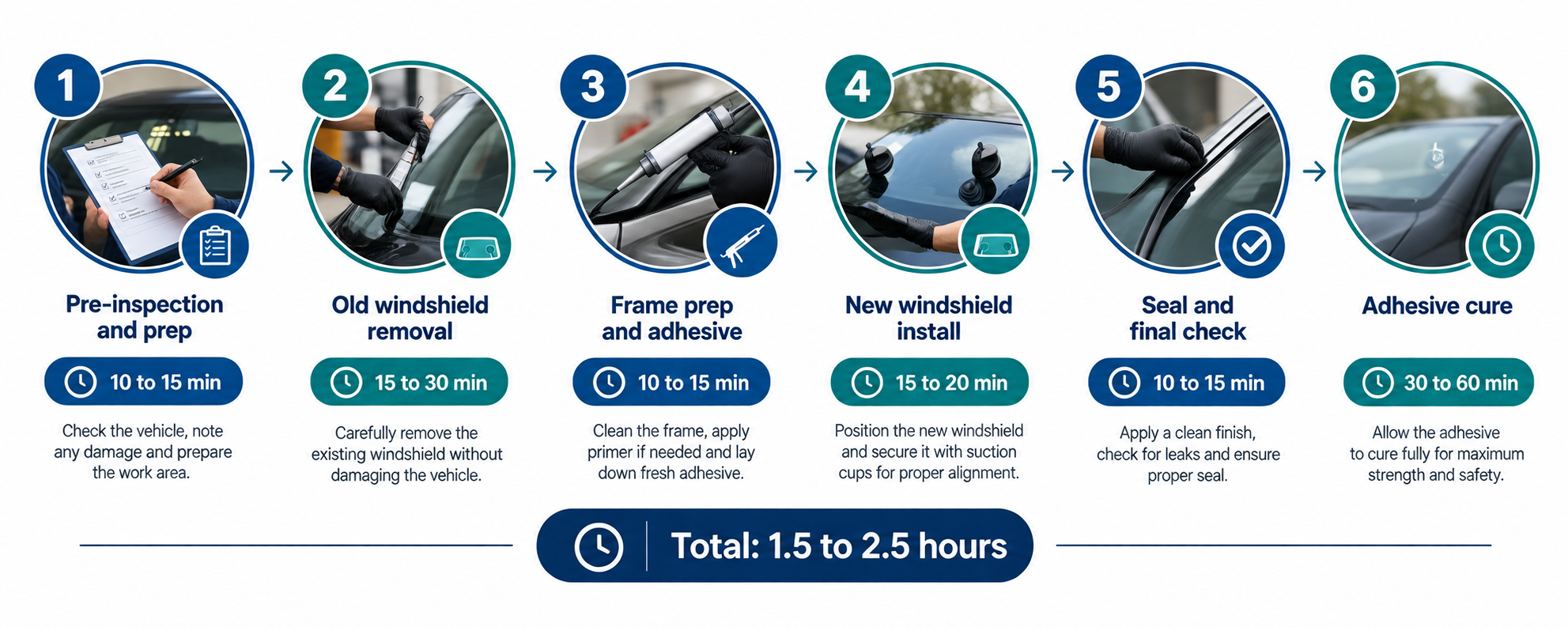
What Happens at Each Stage of a Windshield Replacement?
Stage 1: Pre-Inspection and Vehicle Prep (10 to 15 min)
Before any glass gets touched, a thorough tech does a full walk-around of your car. This step gets skipped or rushed by less experienced crews, and it matters more than most people realize.
- The tech confirms the correct glass was ordered for your exact year, make, and model
- Any existing damage to the frame, trim, or rubber molding is noted so you are not blamed for something that was already there
- Your dashboard, steering wheel, and seats are covered to protect against adhesive drips and glass fragments
- Wiper arms are removed and set aside
What you can do beforehand: Clear loose items off your dashboard and front seats, such as phone holders, sunglasses, and registration papers. The cleaner the workspace, the faster and neater the job. |
Stage 2: Removing the Old Windshield (15 to 30 min)
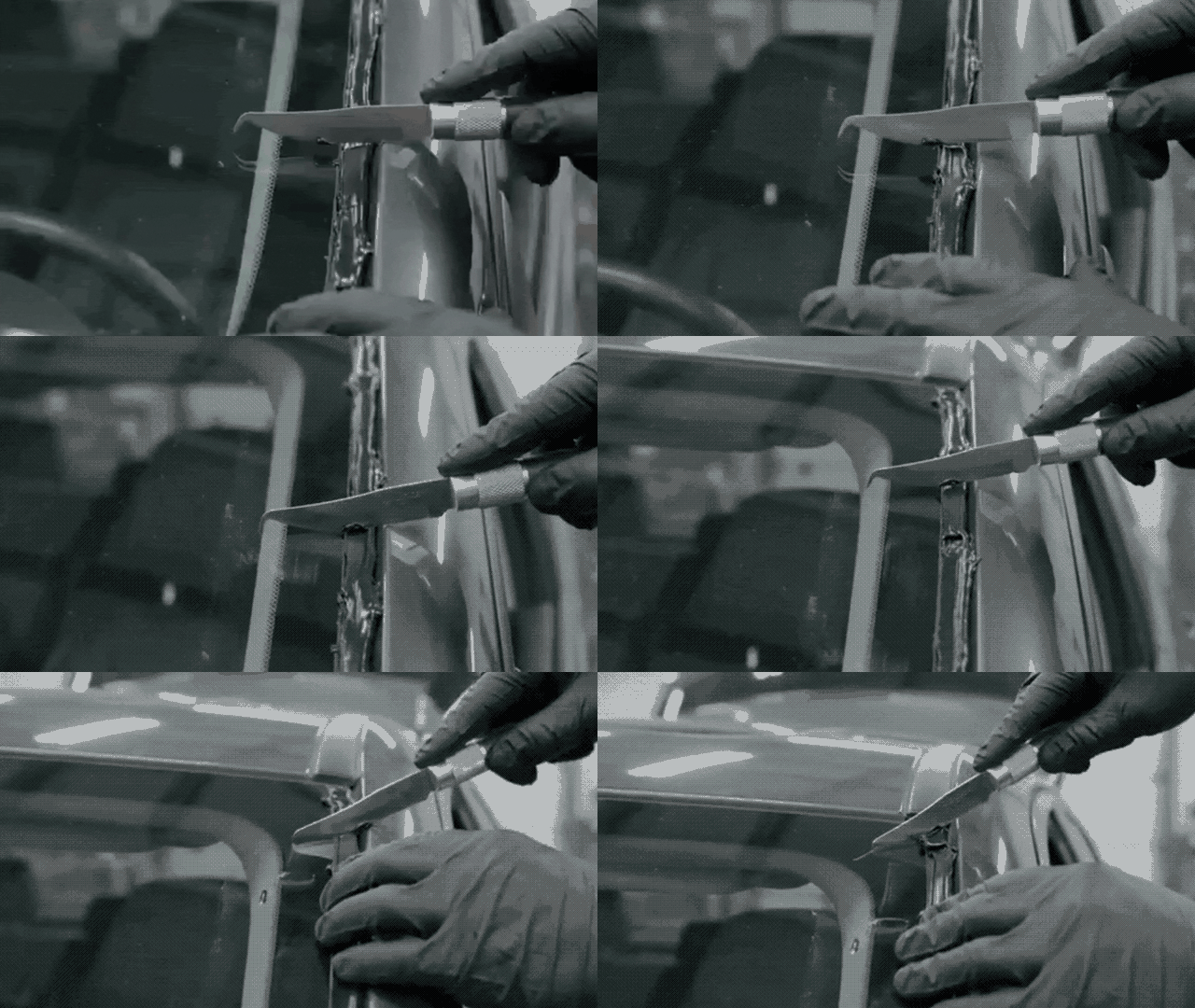
This is where the real work begins, and it is not as simple as just pulling the glass out. Your windshield is bonded to the car frame with a strong polyurethane adhesive. Removing it cleanly takes the right tools and patience.
- A cold knife or power cutting tool slices through the adhesive seal running around the entire perimeter
- The old windshield is carefully lifted out in one piece or in sections if it is too cracked to stay intact
- Leftover adhesive is trimmed off the pinchweld, which is the metal channel that your windshield sits in
The “pinchweld” is just the metal groove around your windshield opening, like a picture frame for the glass. Keeping it clean is critical for a watertight seal on the new one
Heads up: If your windshield shatters during removal (common with badly cracked glass), cleanup will take a bit of time. That is completely normal and not a sign anything went wrong. |
One thing worth knowing: if your frame has rust, old adhesive buildup, or was previously repaired incorrectly, this stage can take 15 to 20 minutes longer. A reputable shop will tell you upfront instead of rushing through it.
Stage 3: Frame Prep and Adhesive Application (10 to 15 min)
Short stage. Absolutely critical. You will not see most of what happens here, but skipping steps at this stage is the number one cause of wind noise, leaks, and early failures after a windshield replacement.
- The pinchweld (frame groove) is cleaned of all old adhesive and debris
- A primer is applied to both the frame and the black ceramic border on the new glass
- The primer is allowed to “flash,” meaning it dries for a few minutes before the next step
- Fresh urethane adhesive is applied in a consistent bead all the way around the frame
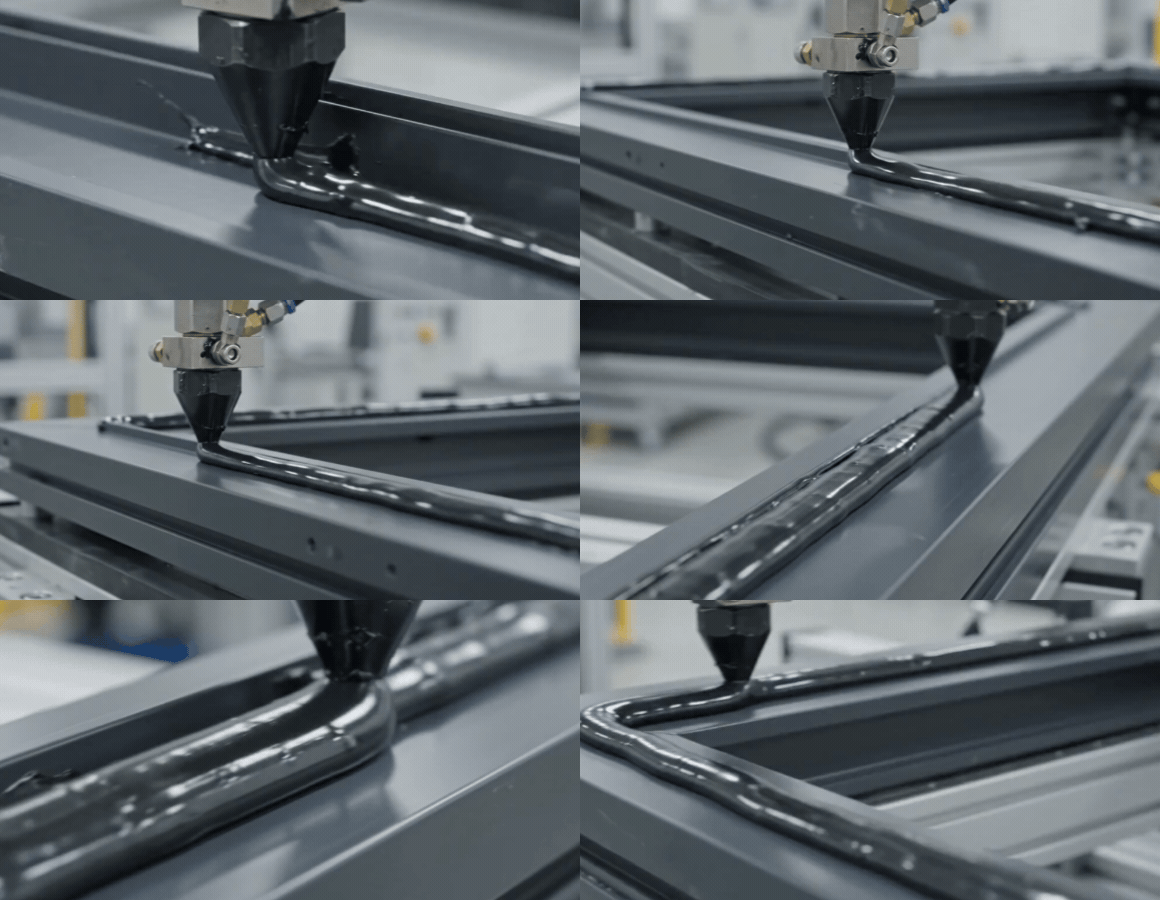
Wind noise after a replacement? Almost always a sign the frame was not properly cleaned or primed before the new glass went in. The AGSC installation standard calls for proper pinchweld preparation before new adhesive is applied. At 916 Auto Glass, this step is never skipped. Want the full picture? See how we professionally replace a windshield. |
Stage 4: Installing the New Windshield (15 to 20 min)
This is the moment the new glass goes in. It looks straightforward, but precision matters. The windshield has to land exactly right before the adhesive starts to set.
- The new glass is lined up with the alignment marks on the frame
- Two technicians (or one using suction cup handles) lower the windshield carefully into the adhesive bed
- Moderate pressure is applied around the perimeter to seat the bond
- Alignment is double-checked before the adhesive begins to grip
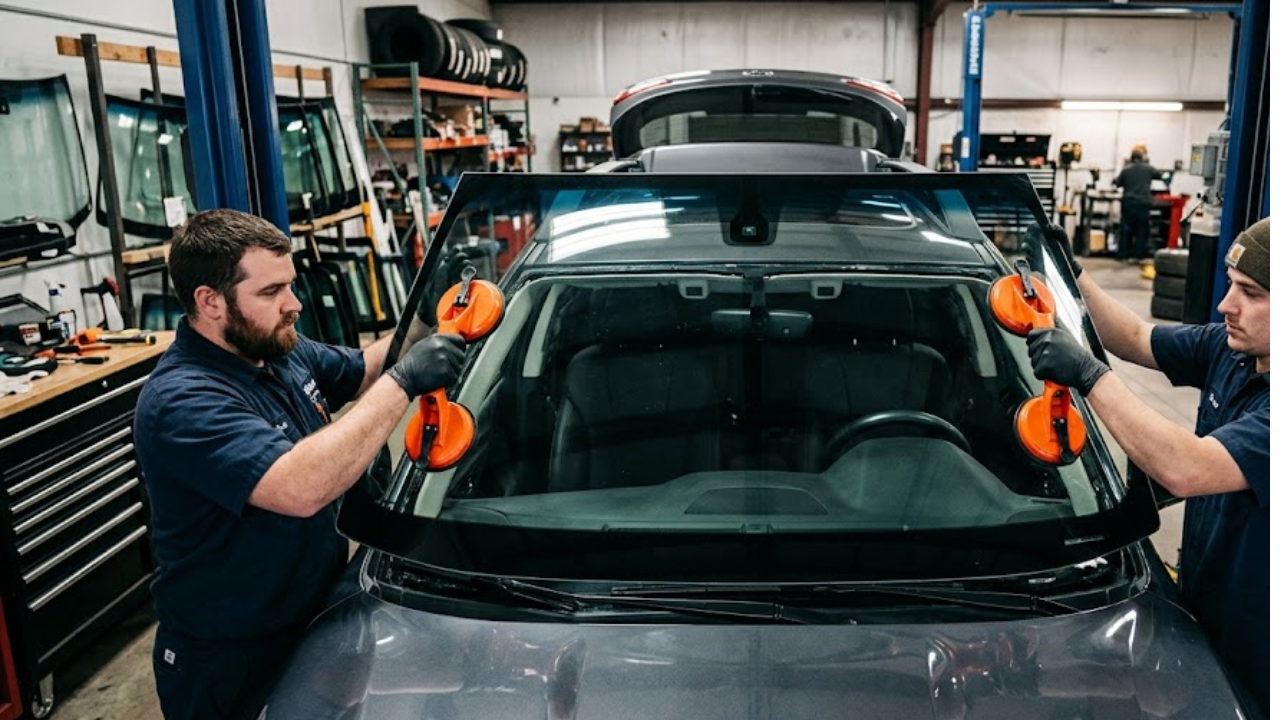
Temperature matters more than most people realize: A cold windshield installed on a hot day, or the other way around, can develop stress cracks. In the Sacramento region, where summer afternoons regularly top 100 degrees F, a good tech lets the glass temperature-match to the vehicle before it goes in. |
At 916 Auto Glass, we use both OEM-quality glass (made to your vehicle’s original factory specs) and OEE-quality glass (independently manufactured glass that meets the same safety and fit standards). Whichever you choose, we install it following the standard maintained by the Auto Glass Safety Council (AGSC). We will always tell you which one we are using before the work starts.
Stage 5: Sealing, Trim, and Final Inspection (10 to 15 min)
The glass is in, but there are a few finishing steps before the job is done.
- Wiper arms are reattached and tested
- Exterior trim molding is re-seated or replaced if worn
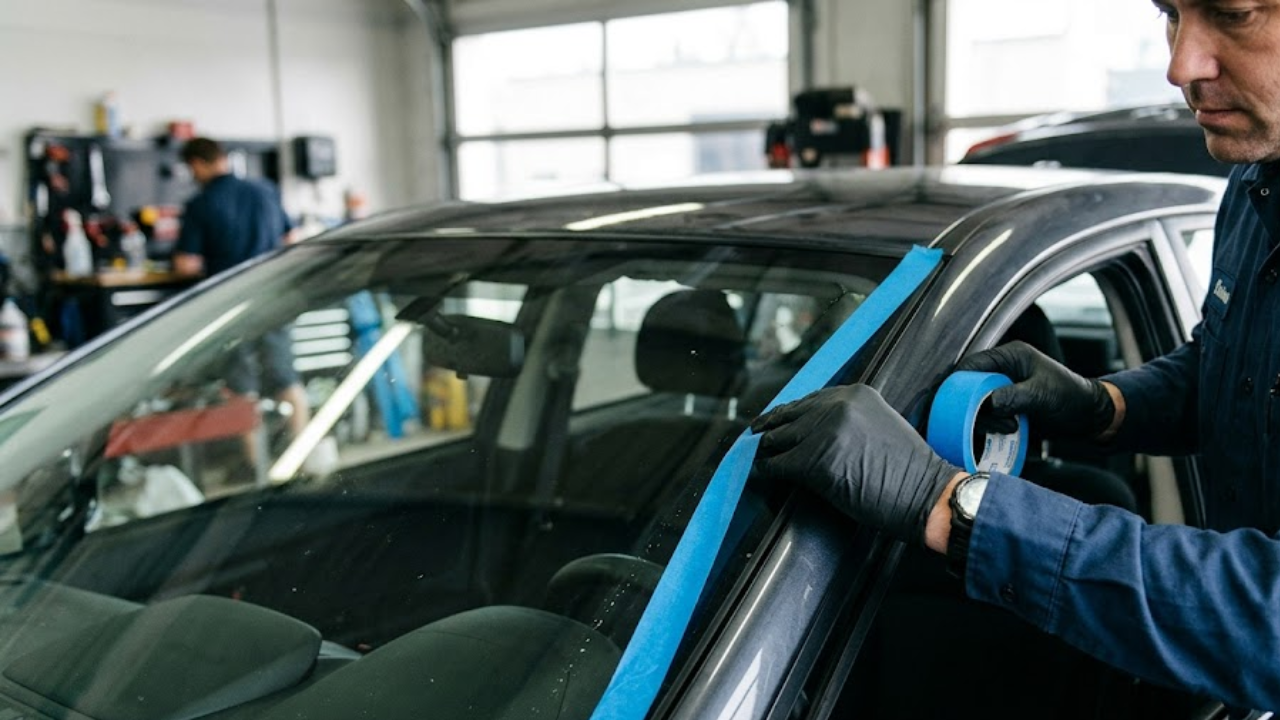
- Retention tape is applied around the edges (see the FAQ below for what this tape is actually for)
- The tech checks for any gaps, uneven adhesive, or alignment issues
- The interior is wiped clean of any glass dust or adhesive residue
Stage 6: The Cure Window, or When Can You Actually Drive? (30 to 60 min)
This is the part most people forget to ask about. The adhesive holding your windshield is not just keeping rain out. It is a structural safety component of the car. In a rollover, it helps support the roof. In a crash, airbags rely partly on the windshield being firmly bonded to deploy correctly. Until that adhesive reaches safe strength, driving puts you at risk.
Milestone | Time | What It Means |
|---|---|---|
Safe to drive | 30 to 60 min | Adhesive is strong enough for normal roads |
Near-full cure | 24 hours | Okay for car washes and highway rain |
Full structural strength | 24 to 72 hours | Adhesive brand and temperature-dependent |
What Affects How Fast the Adhesive Cures?
- Temperature: Cold slows the cure down. In a Sacramento winter, leaving in under an hour is not advisable. Summer heat speeds things up and 30 minutes may be enough.
- Humidity: Higher humidity can slightly speed up the initial cure of urethane adhesive.
- Adhesive type: 916 Auto Glass uses premium fast-cure adhesives that can allow safe drive-away in as little as 30 minutes. Your technician will confirm the exact time for your specific job.
What happens if you drive too soon?
- Wind pressure at highway speeds can shift the glass before the adhesive sets
- A speed bump or pothole can stress the uncured bond
- In a crash, an improperly bonded windshield can separate from the frame instead of supporting the roof
- The passenger airbag uses the windshield as a backstop, so a weak bond can let the glass pop out instead of holding the airbag in place
The 30-to-60-minute rule is not just cautious advice. NHTSA’s Federal Motor Vehicle Safety Standard 212 exists to keep the windshield in place during a crash, which is why it is treated as a safety component, rather than just a piece of glass.
Repair vs. Replacement: How the Timelines Compare
Not every chip or crack means a full replacement. If the damage is small and in the right location, a repair is faster, cheaper, and does not require any cure wait. Here is how they stack up:
Service | Duration | Drive-Away Wait | Best For |
|---|---|---|---|
Chip repair (single chip) | 15 to 30 min | Immediate | Chips smaller than a quarter |
Crack repair (short crack) | 20 to 45 min | Immediate | Cracks under 6 inches, not in driver’s line of sight |
Full replacement | 60 to 90 min | 30 to 60 min | Large cracks, cracks in driver’s sightline, shattered glass |
Replacement with camera calibration | Add 30 to 90 min | 30 to 60 min after glass install | Vehicles with lane-keep, auto-braking, or adaptive cruise |
Quick repair eligibility check: Damage can usually be repaired if it is a chip smaller than a quarter or a crack shorter than a dollar bill (about 6 inches), is not in the driver’s direct line of sight, is not at the edge of the glass, and has not been sitting with dirt or moisture in it for a long time. Not sure? Send us a photo and we will give you an honest answer. |
What to Do in the 24 Hours After Your Replacement
Getting the glass installed is only half of it. What you do in the hours that follow affects how well the windshield bonds and whether the seal remains watertight in the long term.
First Hour
- Stay parked until your technician clears you to drive
- Crack a window slightly to equalize cabin pressure
First 24 Hours
- No car washes, as high-pressure water can compromise the seal
- Remove retention tape only when your tech says, usually at 24 hours
- Do not slam doors as it creates pressure spikes inside the cabin
- Avoid highway driving in heavy rain
After 24 Hours
- Normal use resumes. Car washes, highway speeds, rain: all fine
Watch For
- Wind noise after installation = warranty issue, call us
- Water coming in = warranty issue, call us
- Visible gaps in the seal = warranty issue, call us
Conclusion
So, how long does it take to replace a windshield? For most vehicles, the installation takes 60 to 90 minutes, and you should plan on 1.5 to 2.5 hours in total once you add the safe drive-away time. If your car has driver-assist cameras, allow another 30 to 90 minutes for ADAS calibration. After that, give the adhesive a full 24 hours before car washes or heavy highway rain.
The quickest way to get an exact time is to share your year, make, and model when you book. With mobile service, you can stay at home or work while the job gets done. And if the damage is still small, ask about a quick chip repair first, since it may save you a full replacement.
Ready to Book? We Come to You.

How Long Does a Windshield Replacement Take? Complete Timeline Explained
Home Table of Contents Quick Answer: The actual installation takes 60 to 90 minutes. Add 30 to 60 minutes for
Benefits of Choosing Mobile Windshield Replacement Services
Home Table of Contents Key Takeaways Mobile windshield replacement brings certified technicians to your home, workplace, or another convenient location.
How Mobile Windshield Repair Services Work (Step-By-Step Guide)
Home Table of Contents Key Takeaways Mobile windshield repair fixes small chips and cracks without requiring you to visit an