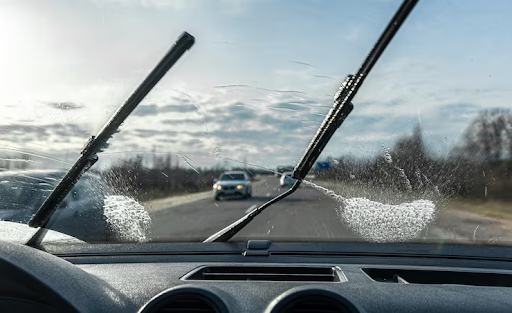
Did you know that your windshield holds up to 60% of your roof’s weight in a rollover? Your passenger airbag is built to hit it first. Federal safety standards — FMVSS 216, 212, and 208 — treat it as a structural component rather than a window.
A crack does not just affect your view. It weakens all three of those systems at once. New car or old, one thing stays the same: your windshield is doing a lot more than you think — and its condition matters more than most people realise until it is too late. To know more about its importance, keep on reading
What Is A Windshield?
A windshield is specifically engineered laminated safety glass—not ordinary glass—and this distinction is critical to its role as a vehicle safety system. In other words, a windshield consists of two layers of tempered glass permanently bonded together with a thin polyvinyl butyral (PVB) interlayer under heat and pressure.
When impacted, the glass may crack—but the PVB layer holds the fragments in place, preventing dangerous shattering and maintaining structural integrity. This design is intentional: it transforms the windshield from a simple barrier into an active safety device.
Why Laminated vs. Tempered Glass:
|
Windshield (Laminated) |
Side Windows (Tempered) |
|
Holds together when cracked |
Shatters into “pebbles” |
|
Provides structural support |
Designed for easy escape |
|
Blocks 99% UV rays |
No UV protection |
4 Primary Functions:
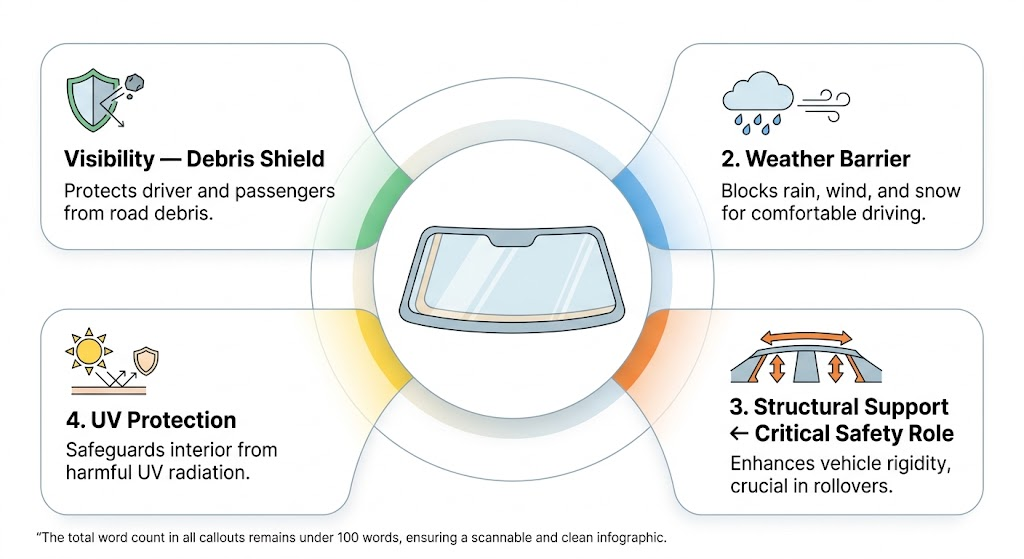
1. Visibility — debris shield: Protects you from rocks, gravel, insects, and road debris at highway speed without shattering.
2. Weather barrier: Seals out wind, rain, and heat while maintaining clear sightlines at all times.
3. Structural support ← critical safety role: Load-bearing under FMVSS 216 and 212. Supports roof crush resistance and cabin integrity in a crash.
4. UV protection: The PVB interlayer blocks up to 99% of harmful UV radiation — protecting your skin and your interior.
Highway 99 debris, 100°F+ summer heat, and sudden rain test your windshield daily.
III. HOW YOUR WINDSHIELD PROTECTS YOU IN A CRASH
- Rollovers (FMVSS 216)
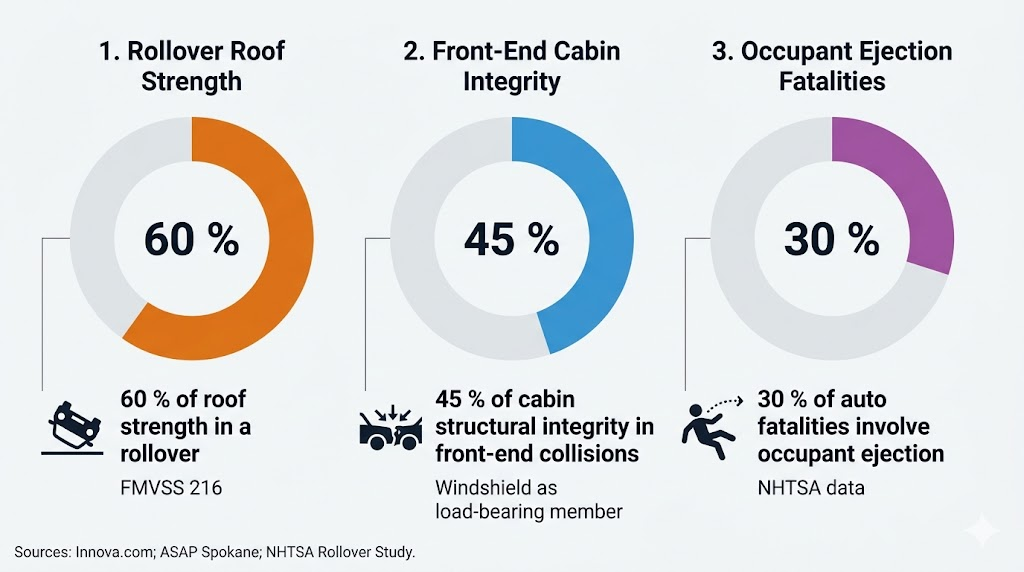
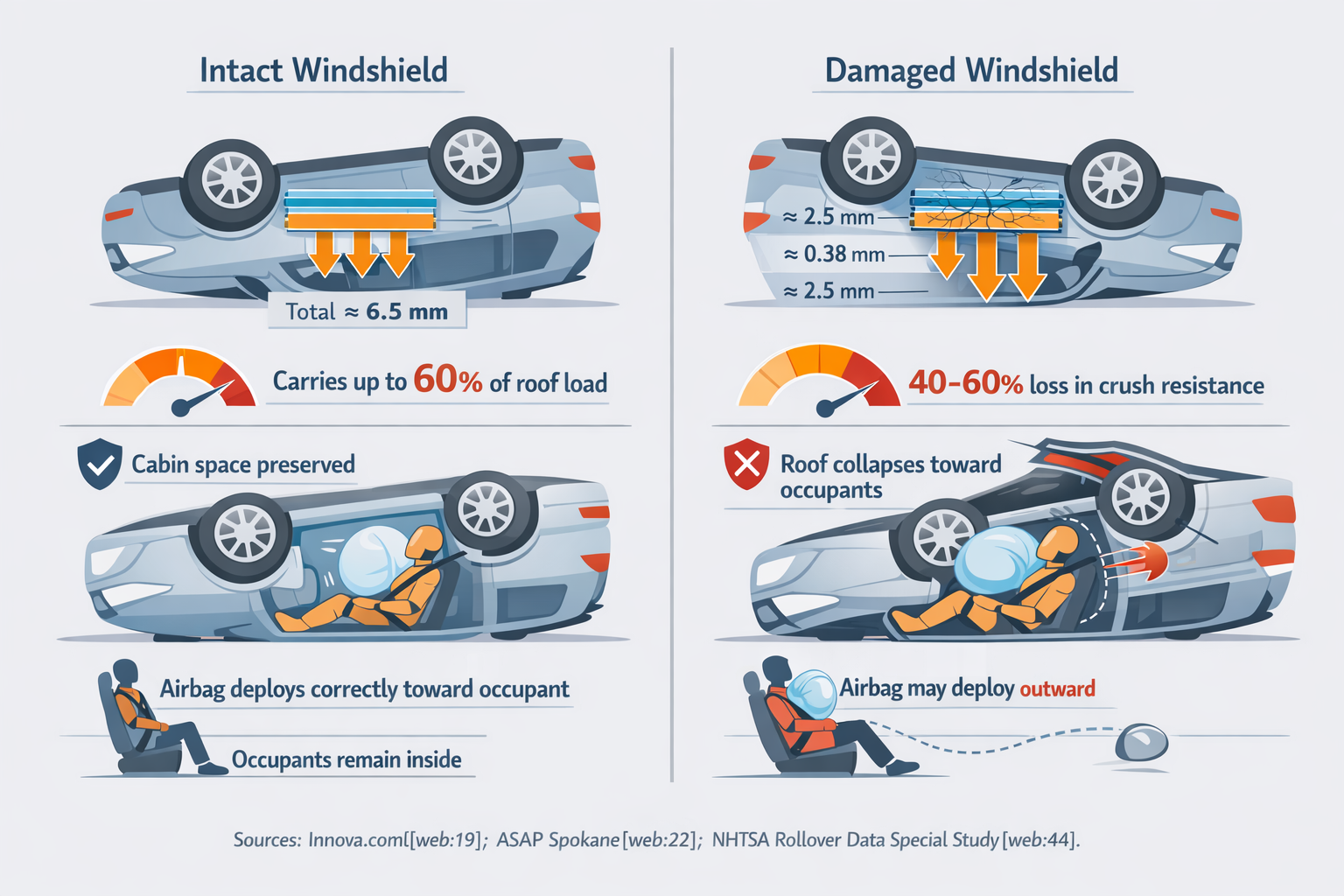
A properly installed windshield provides up to 60% of your roof’s crush resistance in a rollover — preventing cabin collapse and protecting the space occupants sit in. A cracked or improperly bonded windshield loses 40–60% of that resistance, dramatically increasing the risk of the roof caving in toward you.
- Front-end collisions
In a head-on crash, your windshield provides up to 45% of your cabin’s structural integrity. It stops the roof from buckling forward into the passenger compartment. Remove that support — with a crack, a bad repair, or a poor installation — and the cabin becomes significantly more vulnerable to deformation.
- Occupant retention (FMVSS 212)
Your windshield acts as an ejection barrier. NHTSA data shows 30% of auto fatalities involve occupant ejection — and edge cracks directly weaken the bond between the glass and the car frame, creating a separation risk at exactly the moment you need that bond most
Airbag Deployment
Most drivers have never heard this: your passenger airbag does not inflate straight toward the passenger. Here is the actual process:
- Crash sensor triggers airbag — within milliseconds of impact.
- Bag inflates at 200 mph toward the windshield — engineered under FMVSS 208 to use the glass as a solid backstop.
- Windshield redirects the bag to the passenger’s chest and head — cushioning the impact where it matters most.
The Danger: Cracked or improperly bonded windshield = airbag pops glass outward instead of cushioning you.
ADAS: The High-Tech Safety Connection
Advanced Driver Assistance Systems (ADAS) are the safety technologies now standard on most vehicles made after 2018. They include lane keep assist, automatic emergency braking, adaptive cruise control, and collision warning — and every one of them depends on a camera mounted directly on your windshield glass.
|
Here is the reality: Even a small chip can distort the camera’s vision. A 1mm misalignment after replacement — due to the wrong glass, wrong adhesive, or poor technique — can cause complete system failure. Your dashboard will not warn you. The systems simply stop working correctly, or worse, trigger false responses at highway speed. |
After any windshield replacement, professional ADAS recalibration is mandatory under SAE J3016 standards. There are two methods:
- Static calibration
Shop-based with specialized target boards. Vehicle stays parked. Required for most standard vehicles.
- Dynamic calibration
Real-road driving protocol at specific speeds. Required for Tesla, Honda, and Toyota — all common in Sacramento.
Risk of skipping recalibration
Lane-keeping fails. Emergency braking malfunctions. Constant false warnings trigger without reason. None of this produces a warning light — you simply lose the safety systems you paid for, silently, after a replacement that seemed fine
Sacramento Note:
Tesla, Honda, and Toyota models are among the most common vehicles in Sacramento. All require on-site ADAS calibration after windshield replacement. We bring the equipment directly to you.”
The Critical Viewing Area & Legal Consequences
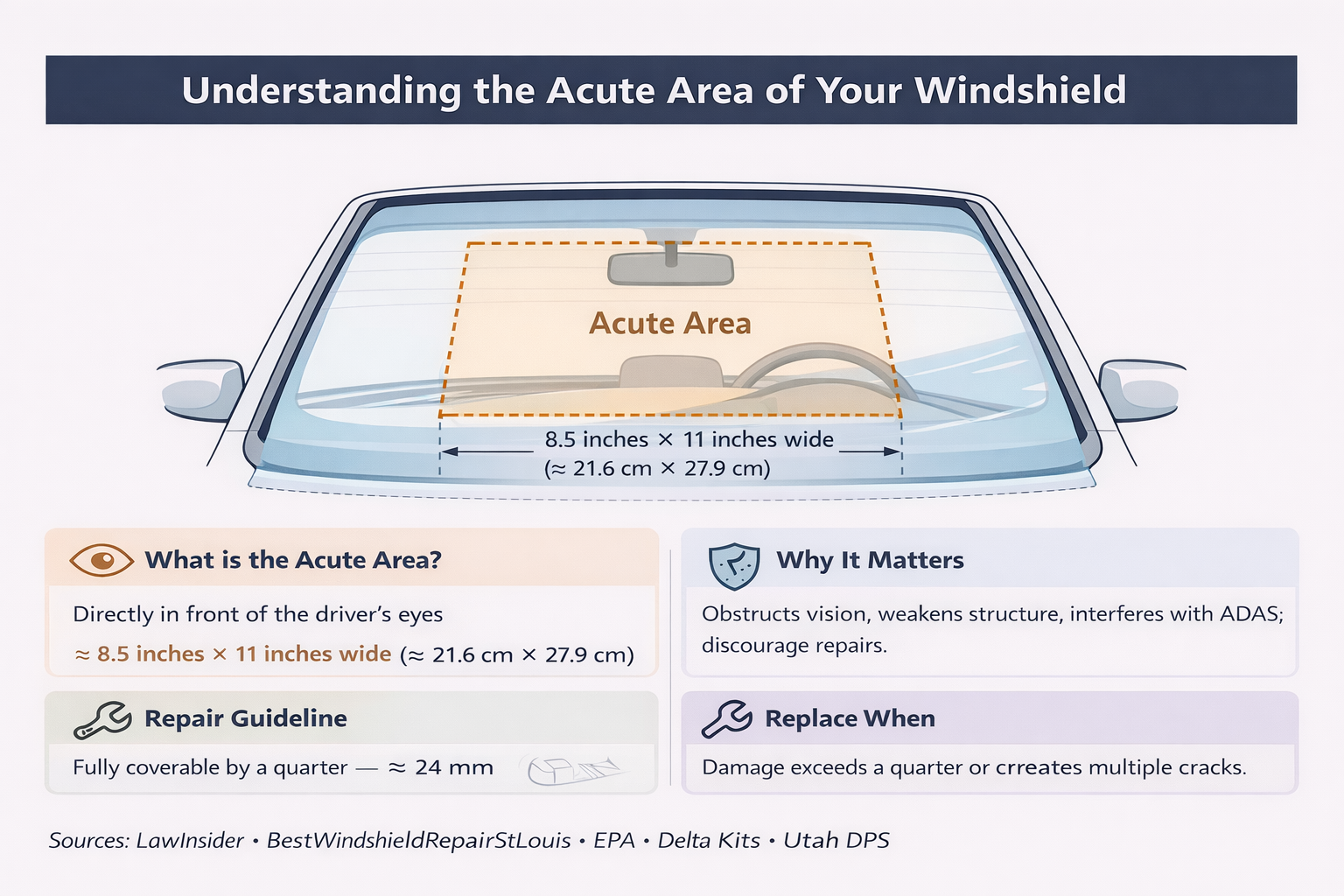
The acute area is the 8.5″ × 11″ zone on your windshield directly in the driver’s line of sight. Chips or cracks in this zone cause glare, distortion, and blind spots — and increase accident risk by 30% during dusk and dawn conditions when light angles are most problematic.
Under California Vehicle Code §26708, any obstruction or damage in this zone is illegal to drive with.
4 types of dangerous damage
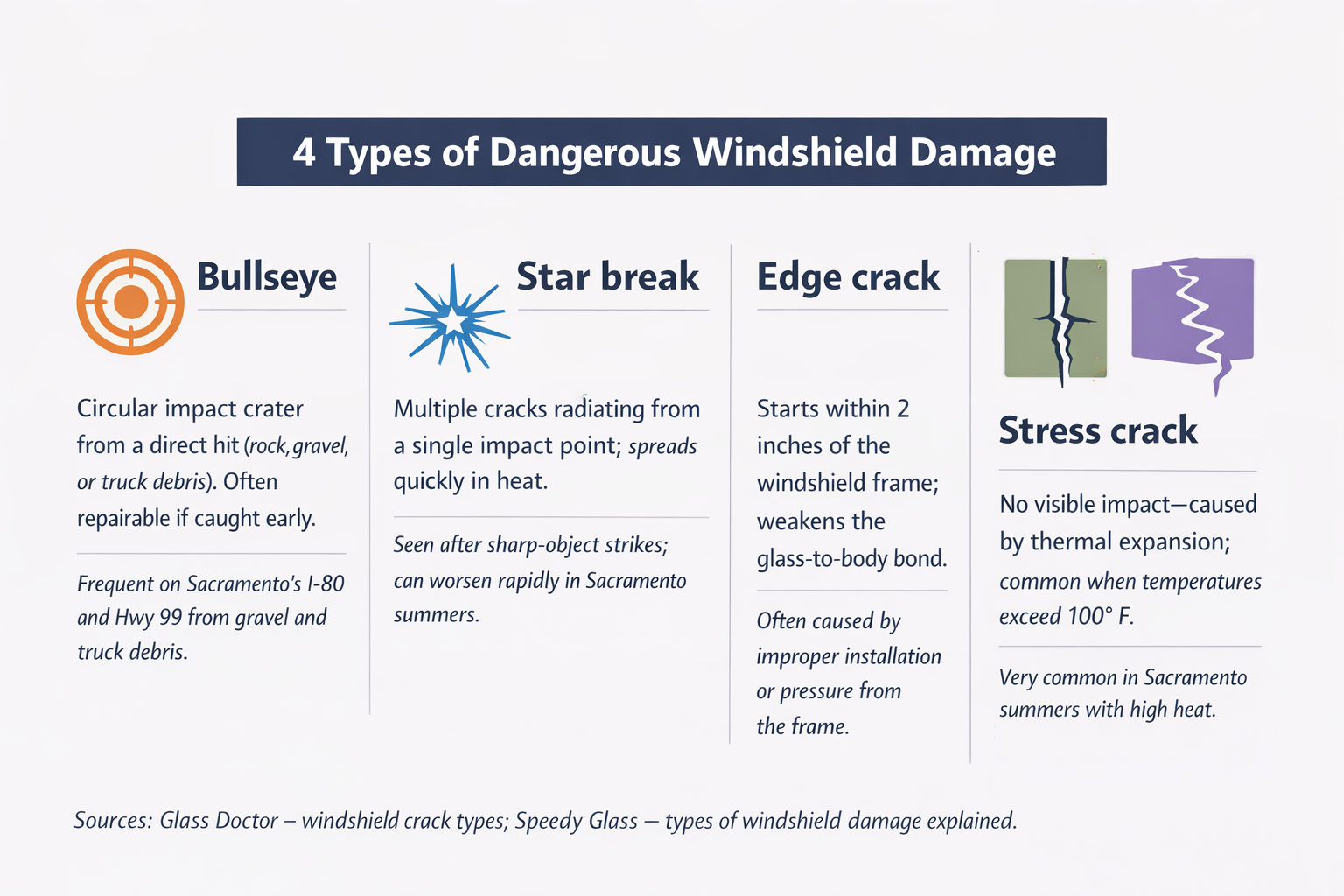
- Bullseye
Circular impact crater. Most common on Sacramento’s I-80 and Hwy 99 from gravel and truck debris.
- Star break
Multiple radiating cracks from one impact point. Spreads faster in heat.
- Edge crack
Starts within 2 inches of the frame. Directly undermines the structural bond between glass and body.
- Stress crack
No impact — caused by thermal expansion. Very common in Sacramento summers, where temperatures exceed 100°F.
Legal consequences of ignoring damage in the acute area
- Failed vehicle safety inspection
- Registration is denied until it is repaired
- Traffic citation from law enforcement
When To Repair Vs. Replace
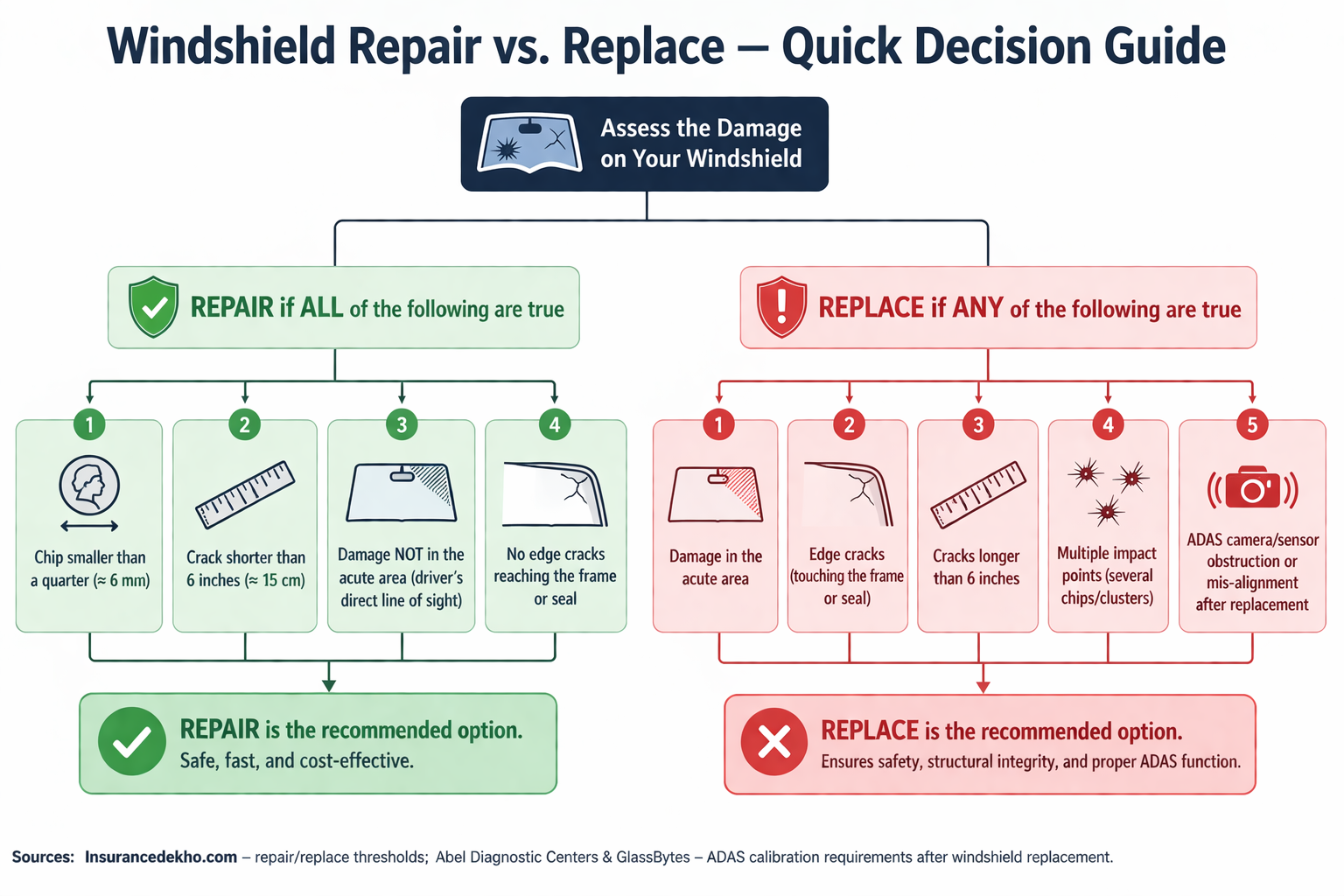
Sacramento’s temperature swings — from 40°F in the morning to 105°F+ in the afternoon in summer — turn small chips into full cracks within 48 hours. Speed matters. The longer you wait, the more likely a simple repair becomes a full replacement.
Glass Quality Choice:
|
Aspect |
OEM Glass — Recommended For |
Aftermarket Glass — Adequate For |
|
Vehicle type |
|
|
|
Standards & fit |
Meets original FMVSS 205 specifications and the vehicle maker’s exact tolerances. |
Also complies with federal FMVSS 205 standards, though fit and thickness may vary slightly. |
Insurance & California Law
California Law:
Under California Vehicle Code §26708, driving with cracks or obstructions in the driver’s direct line of vision is illegal. A failed safety inspection means no registration renewal until the windshield is repaired or replaced.
Insurance coverage
Comprehensive auto insurance policies cover windshield damage. Many Sacramento carriers offer $0 or very low deductibles specifically for glass claims.
We handle all insurance paperwork directly at 916 Auto Glass — zero forms for you to fill out. Contact us, and we will check your policy before any work begins.
Conclusion
Your windshield is more than glass — it’s a structural safety system protecting you in crashes, guiding airbags, and enabling ADAS. In Sacramento’s harsh conditions, even small chips quickly become dangerous cracks. Repair or replace promptly to stay safe, legal, and protected on the road.
Don’t wait until a chip becomes a crack, or a crack becomes a failure.

How Long Does a Windshield Replacement Take? Complete Timeline Explained
Home Table of Contents Quick Answer: The actual installation takes 60 to 90 minutes. Add 30 to 60 minutes for
Benefits of Choosing Mobile Windshield Replacement Services
Home Table of Contents Key Takeaways Mobile windshield replacement brings certified technicians to your home, workplace, or another convenient location.
How Mobile Windshield Repair Services Work (Step-By-Step Guide)
Home Table of Contents Key Takeaways Mobile windshield repair fixes small chips and cracks without requiring you to visit an